Adopt Envelope Budgeting Tips Before Income Spikes
— 7 min read
63% of freelancers struggle with cash-flow spikes, so the fastest fix is to adopt envelope budgeting before your income jumps.
Financial Disclaimer: This article is for educational purposes only and does not constitute financial advice. Consult a licensed financial advisor before making investment decisions.
Envelope Budgeting Tips for Freelance Finance
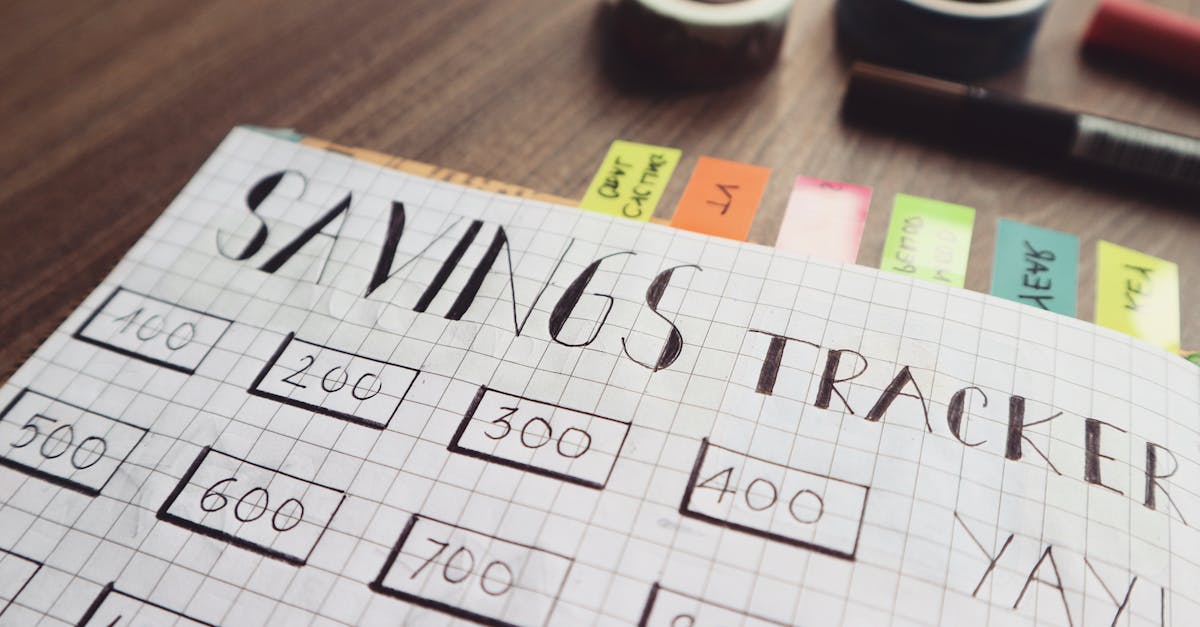
When my tax audit arrived, I was scrambling to locate receipts hidden in a shoebox and a half-full coffee mug. The panic was real, but the solution was embarrassingly simple: separate every incoming dollar into a pre-designated envelope. By segmenting income into monthly envelope categories - groceries, savings, and discretionary expenses - you transform unpredictable cash flow into visual, enforceable limits, reducing impulse spends.
My first step was a retrospective variance analysis of the previous year’s earnings. I pulled my PayPal and Stripe statements, plotted each month’s high and low, and derived a “baseline” amount for each envelope. For example, my grocery envelope never fell below $300 because my analysis showed that even in the leanest months I still needed that amount to avoid food insecurity. The key is that the envelope amount is derived from actual variability, not a wishful guess.
Next, I paired each physical envelope with a digital counterpart. Apps like YNAB and EveryDollar let you create virtual envelopes that sync in real-time. When a transaction hits, the app automatically deducts the amount from the appropriate envelope and fires an instant alert if you exceed the limit. This automation eliminates the manual bookkeeping that trips up most freelancers, and it gives you a daily “cushion curve” you can glance at on your phone.
Finally, I built a habit loop around the envelope system: every payday I pull cash, split it into the envelopes, and snap a photo of each stack. The tactile act of seeing cash physically move reinforces the mental accounting principle that underpins the method. Even if you’re a digital-only worker, the visual cue of a declining balance in the app creates the same psychological barrier against overspending.
Key Takeaways
- Set envelope amounts based on last year’s earnings variability.
- Use a digital app to sync real-time balances and alerts.
- Physically allocate cash each payday to reinforce discipline.
- Review and adjust envelopes monthly for changing income patterns.
Cash Budgeting for Gig Workers to Stabilize Cash Flow
My next revelation came when I tried to forecast my monthly cash flow using a plain spreadsheet. I listed every gig shift, but the rows multiplied faster than my income, and I still felt a looming gap at month-end. The fix? A cash-budgeting sheet that mirrors gig pay spikes, not a static budget that assumes a regular paycheck.
Start by creating three columns: "Gig Shift," "Projected Revenue," and "Actual Revenue." As soon as a gig is booked, enter the expected amount in the projected column. At the end of the day, move the number to the actual column. This live-updating sheet shows you exactly how much cash you have on hand and how much is still in the pipeline.
From there, carve out a “Reserve” line that automatically nets 10-15% of each paycheck. In my case, I set the reserve at 12%, which translates to $150 on a $1,250 gig payment. Over time, that reserve grew into a three-month runway - exactly the safety net recommended by most financial planners for independent contractors.
Automation is the secret sauce. I set up my bank to split every incoming deposit into three separate accounts: core checking, savings, and tax. The split occurs the instant the deposit lands, so the paycheck never sits idle in a single bucket. This eliminates the lag that typically weakens resilient finances and forces you to live within the envelope you’ve already allocated.
Finally, schedule a weekly “budget pulse” where you glance at the sheet, confirm that the reserve meets the three-month target, and adjust the next week’s envelope caps if needed. By treating each gig as a data point rather than a mystery, you turn volatility into a predictable rhythm you can dance to.
Managing Income Volatility with Dollar-Cost Averaging
When my freelance earnings hit a six-figure peak in Q3 2025, I panicked about investing the windfall. I remembered a conversation about dollar-cost averaging (DCA) and realized it could smooth the ride. By committing a fixed percentage of every pay stub into long-term securities, you average purchase price over volatile periods, reducing exposure to high peaks.
In practice, I set my DCA contribution at 8% of every net deposit. If I earned $2,000 in a week, $160 automatically bought shares of a low-cost index fund. When a slow week delivered only $800, the contribution fell to $64. Over a year, this strategy bought more shares when prices were low and fewer when prices were high, flattening the cost curve.
But DCA alone isn’t enough for freelancers who also need liquid reserves. I paired the strategy with emergency-fund dividends: every quarter I took a slice of the investment’s gains - no more than 5% of the total portfolio - and re-allocated it back into my cash reserve. This created a dynamically adaptive fund that adjusts to net gain or loss, keeping the safety net robust without sacrificing growth potential.
Tech platforms in 2026, such as the new Robo-Invest APIs, now forecast bump cycles based on your income history. They recommend tweaking your DCA schedule in real-time: increase the contribution during a high-earning month, dial it back when a lull is predicted. The result is a balanced portfolio that still respects short-term cash needs.
The uncomfortable truth? Ignoring DCA means you’ll likely buy at market peaks and sell at troughs, eroding wealth faster than any “saving more” mantra can compensate for. For freelancers, the math is simple: disciplined averaging outperforms erratic timing, period.
Budgeting Best Practices That Fit Irregular Pay
When I first tried the classic 50-30-20 rule, my numbers broke the moment a $3,200 gig landed in a month with only $1,100 in other income. The rule was designed for salaried workers, not for people whose paycheck is a rolling wave. I had to de-synchronize variable payments from mandated commitments.
The solution was to adopt a semi-fixed “Income anchor” week. I earmarked the first Wednesday of every month as the anchor: I only spend enough to cover rent, utilities, insurance, and any recurring subscriptions. Everything else - whether it’s a sudden influx of cash or a quiet week - gets parked in the discretionary envelope for later review.
Next, I tweaked the 50-30-20 model. When earnings dip, I reduce the discretionary floor to 15% instead of 30%, but I never let the savings portion fall below 20%. I achieve this by alternating high- and low-earning periods: in a high-earning month I overshoot the 20% savings goal, creating a buffer that carries me through a low-earning month without breaking the rule.
Quarterly revisiting is non-negotiable. I pull my envelope balances, compare them to the projected bands, and adjust caps accordingly. I also incorporate tax impacts: every quarter I run a quick tax estimate using the IRS tax calculator and funnel that amount into a dedicated tax envelope. This keeps me from the dreaded “tax surprise” that can wipe out an entire savings buffer.
Lastly, I embed feedback loops. After each quarter, I ask myself three questions: Did I exceed any envelope? Did I under-utilize my savings envelope? And what tax changes are on the horizon? The answers drive the next quarter’s envelope sizes, ensuring the system evolves with my income reality.
Allocating a Flexible Budget for Unexpected Events
In early 2026 I launched a new gig platform that paid 25% more per project. The surge felt exhilarating, but I quickly realized that without a flexible allocation plan, the extra cash would evaporate into lifestyle inflation. I decided to spread the increased income over a tri-month budget with 15% earmarked for future spin-ups or a specialized skillset fund.
The tri-month framework works like this: month one receives the bulk of the new income, month two gets a reduced amount, and month three receives the remainder. This staggered distribution prevents a single-month windfall from skewing my spending habits. The 15% set-aside goes into a “Future Spin-up” envelope - money I can use to test new services, buy software, or fund a certification.
I also adopted tiered surplus distributions. The first 50% of any surplus after meeting core expenses goes to near-term investments like online courses or industry conferences. The next 30% strengthens my tax pockets, ensuring I’m never scrambling when quarterly estimated taxes are due. The final 20% fuels an “Emergency Boost” stream, a liquid reserve that can be tapped for immediate hand-up moves such as unexpected equipment repair.
Fintech APIs released in 2026 now compute “cushion curves” - visual dashboards that plot remaining runway before hitting a budgetary hit point. The dashboard updates in real-time as you log expenses, giving you a clear reminder of how much wiggle room you have left for the month. If the curve flattens, the system nudges you to pause discretionary spending or re-allocate surplus from the lower tiers.
The uncomfortable truth is that most freelancers treat extra income as a free-for-all. By structuring that windfall with flexible envelopes and tiered allocations, you turn a fleeting spike into lasting financial leverage.
Frequently Asked Questions
Q: How do I start envelope budgeting if I only earn digitally?
A: Use a digital envelope app like YNAB or EveryDollar, create categories that mirror your cash envelopes, and set automatic transfers from your checking account into each virtual envelope each payday. The visual balance and alerts replicate the tactile discipline of physical cash.
Q: What percentage of my freelance income should I reserve for taxes?
A: A safe rule of thumb is 25-30% of net earnings, but adjust based on your marginal tax bracket and state obligations. Set up an automated transfer to a dedicated tax account each time you receive payment to avoid quarterly surprises.
Q: Can dollar-cost averaging work with low-balance accounts?
A: Yes. Even $50 per month can compound over time. Choose a low-fee index fund or a robo-advisor that lets you set fractional shares, then let the platform auto-invest each payday. Consistency beats timing every time.
Q: How often should I revisit my envelope allocations?
A: Conduct a full review quarterly. Compare actual spend to envelope caps, adjust for any income swings, and factor in upcoming tax or certification costs. A brief monthly “pulse check” helps you stay on track between deep dives.
Q: Is envelope budgeting still relevant in 2026?
A: Absolutely. While apps have digitized the method, the core principle - assigning every dollar a job - remains the most effective way for freelancers to curb impulse spending and safeguard against income volatility.